Economy: The U.S. economy continues to grow at a healthy rate, supported by a large investment cycle in artificial intelligence (AI) and strong private sector demand. Consumer sentiment remains weak, though consumer spending has remained relatively strong despite signs of slowing demand (retail sales fell 0.6% in July, while credit card delinquencies rose). August’s job gains of 162,000, the strongest tally since March, were more than double expectations, leaving the unemployment rate at 4.1%. Inflation data remains high relative to the U.S. Federal Reserve’s (Fed) target rate of 2%, with July’s Core Personal Consumption Expenditures Index (PCE) rising 3.3% from last July.
We expect U.S. economic growth to remain healthy. The ability of companies investing heavily in AI to monetize their investments and increase earnings enough to justify their rich valuations remains uncertain, while conflict in the Middle East and the path of inflation and interest rates remain risks.
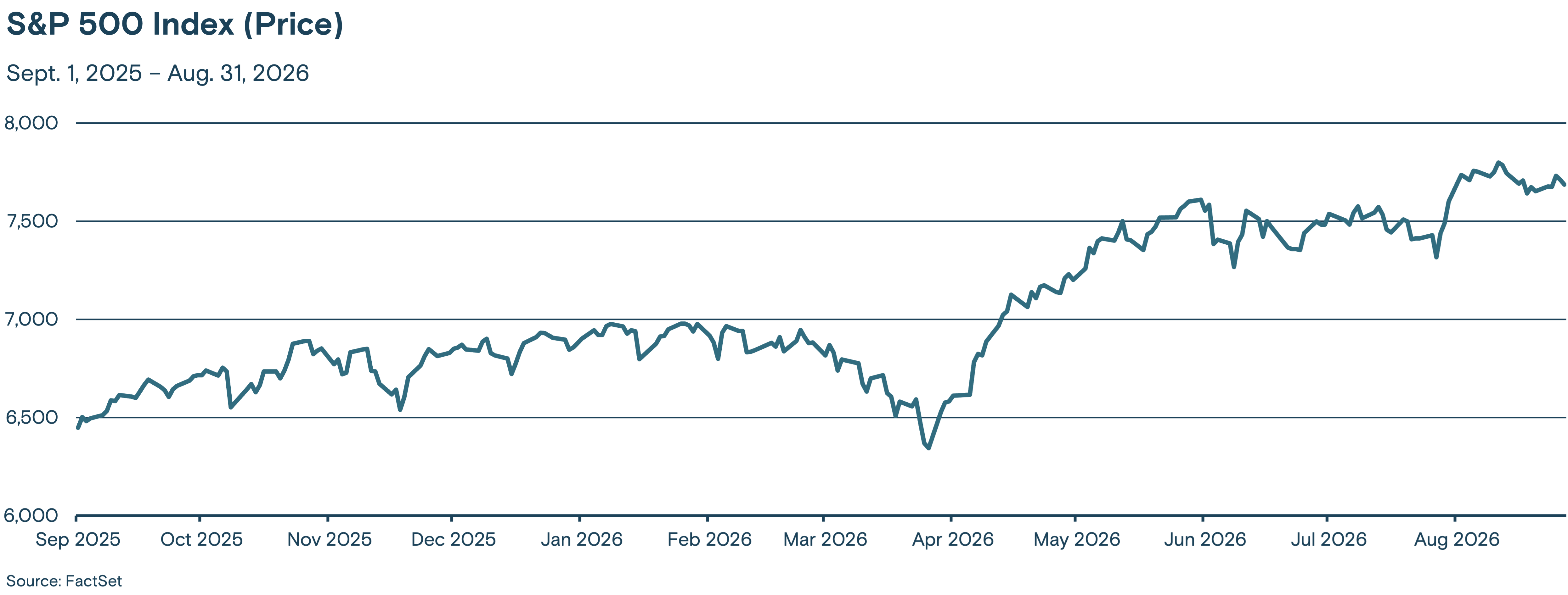
Stocks: The S&P 500® Index rose 2.62% in August, bringing its year-to-date return to 12.28%. The energy, information technology, materials and industrials sectors were standout performers, though strength across the index continued to disperse. Of note, AI leaders overall continued to produce strong earnings. Year to date, six of the Index’s 11 sectors are up more than 10%.
We expect the broadening of performance away from AI to more cyclical stocks to continue, supported by strong earnings and healthy economic growth. We remain moderately overweight large- and mid-cap stocks, and roughly neutral on small-cap stocks. Should equities fall significantly, we would look to add exposure to secular growth stocks at more attractive valuations, including AI leaders and beneficiaries of AI adoption.
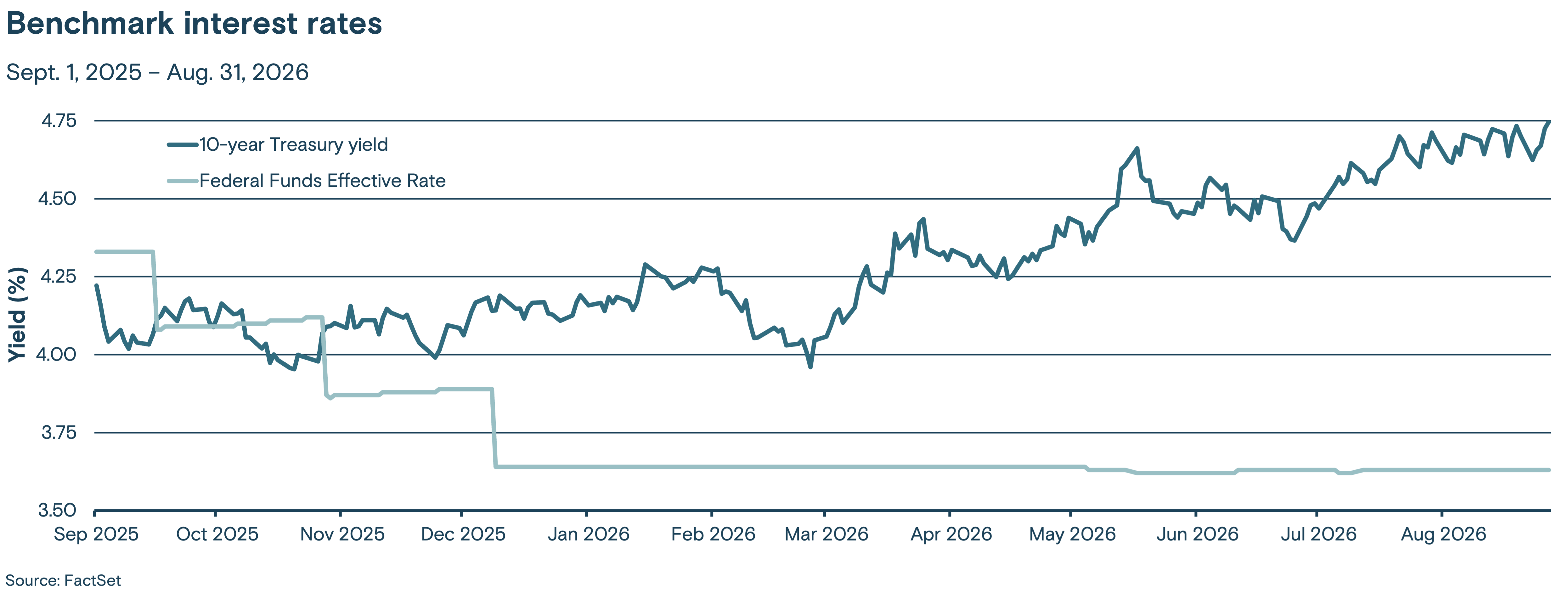
Bonds: The benchmark 10-year Treasury yield ended the month little changed from its July close (near multi-year highs). Shorter maturity Treasuries rose over the period as comments from Fed Chairman Kevin Warsh suggested rising interest rates were increasingly likely in the months ahead to help combat inflation. Longer maturity Treasury yields, including the 30-year Treasury bond, were volatile as the market digested concerns about budget deficits, persistent inflation and geopolitical pressures, such as the sustained conflict in the Middle East. Investment-grade corporate bond spreads were relatively stable during the period.
We remain relatively neutral in our interest rate exposure. We have a small overweight in longer-dated Treasuries given their high absolute yields and their ability to act as a hedge should equity markets sell off significantly. A key risk to that positioning is if higher rates are the catalyst for an equity selloff, but even then rates likely would eventually decline, boosting fixed income returns. Absent a deterioration in economic data, we likely expect the Fed will raise interest rates by 25 basis points in either October or December.