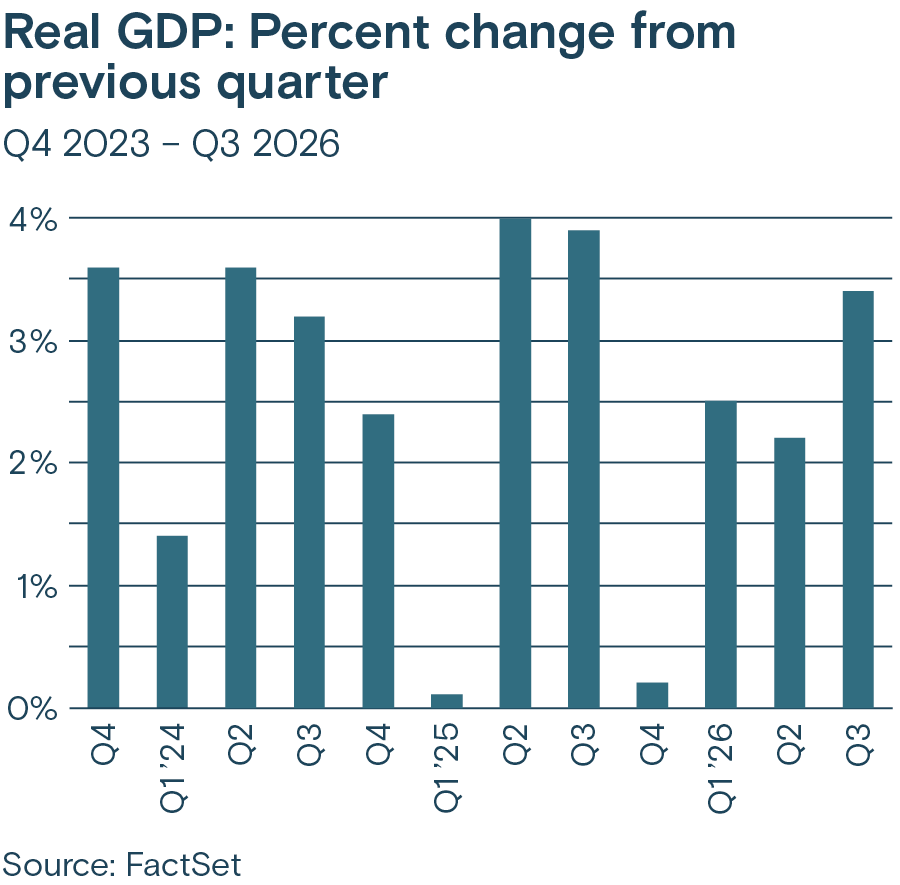
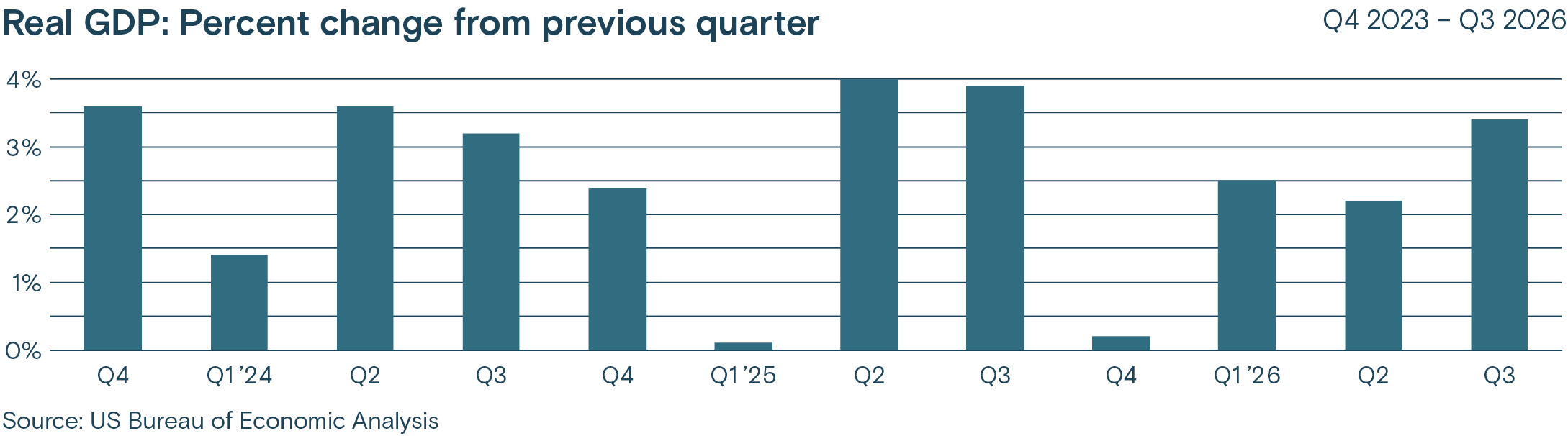
Economy: Third-quarter U.S. gross domestic product (GDP) grew 3.4%, the economy’s fastest rate in a year, supported by the ongoing investment cycle in artificial intelligence (AI) and persistent consumer spending. October’s employment report showed job growth was much higher than expected, while August and September estimates were revised higher. The unemployment rate dropped to 4.1% in October, and wage growth picked up. The combination of robust economic growth and persistently high inflation is expected to compel the U.S. Federal Reserve (Fed) to progressively raise interest rates to combat inflation.
We expect U.S. economic growth to remain healthy and capital spending for AI to remain a driving force. As such, any slowdown in AI-related investment would likely have a correspondingly negative impact on economic growth. Additionally, the ongoing conflict in the Middle East and the path of inflation and interest rates remain risks.
Stocks: The S&P 500® Index fell 0.93% in October, bringing its year-to-date return to 10.73%. Communication services and information technology led the market lower as investors reevaluated companies’ investment in AI. Sales growth among AI leaders has been rapid, but it remains unclear whether they will be able to monetize it sufficiently to sustain strong earnings, or whether competition, including AI models emerging from China, will erode their pricing power.
We remain modestly overweight U.S. equities and overweight large-cap stocks. Including our private equity allocations, we are roughly neutral to small-cap and mid-cap stocks. We continue to be underweight developed international stocks and neutral emerging markets. While we have growing concerns that AI revenues may not meet current expectations, we would look to add marginal exposure to secular growth stocks at more attractive valuations should equities fall significantly.
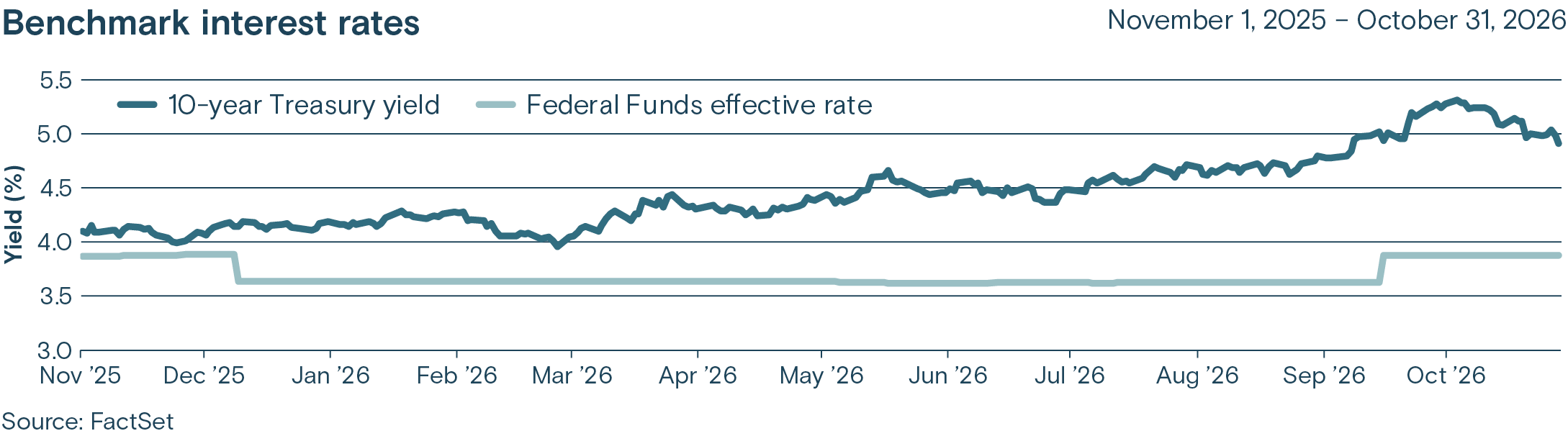
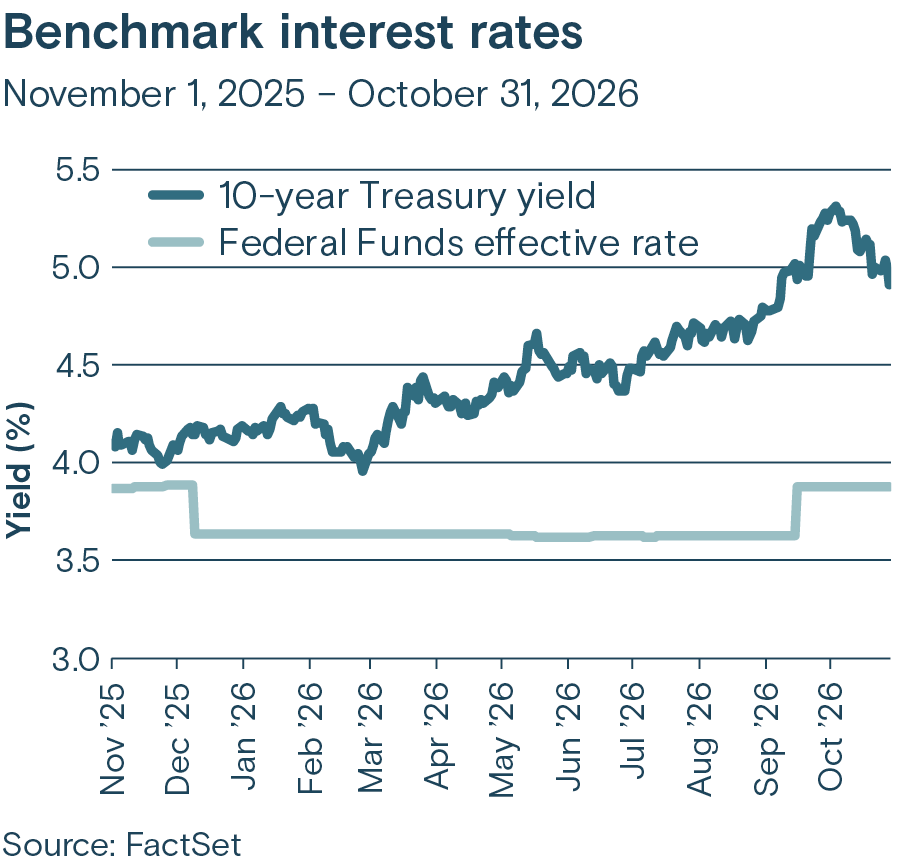
Bonds: The benchmark 10-year Treasury yield fell more than 0.38% in October. The Federal budget deficit remains an ongoing concern as U.S. debt relative to GDP recently breached 100%, its highest level since 1946. However, equity market volatility and attractive current yield levels for Treasuries and investment-grade corporate bonds increased demand for these instruments, driving yields lower. The Bloomberg U.S. Aggregate Bond Index, which includes Treasuries and investment-grade corporate bonds, rose 2.44% in October.
We remain roughly neutral in our interest-rate exposure, with a small overweight in longer-dated Treasuries. We expect interest rates to remain higher than they have been in the past 25 years given solid growth, high inflation and persistent concerns about debt levels. While these risks remain, yields are still relatively high and Treasuries’ ability to act as a hedge if equity markets sell off significantly makes them an attractive holding in the current environment. We continue to see value in investment-grade corporate bonds, despite increasing new issuance to fund investment in AI.