All information and representations herein are as of 06/05/2026, unless otherwise noted.
The views expressed are as of the date given, may change as market or other conditions change, and may differ from views expressed by other Thrivent Asset Management, LLC associates. Actual investment decisions made by Thrivent Asset Management, LLC will not necessarily reflect the views expressed. This information should not be considered investment advice or a recommendation of any particular security, strategy or product. Investment decisions should always be made based on an investor's specific financial needs, objectives, goals, time horizon, and risk tolerance.
Duration is a measure of the sensitivity of the price of a bond or other debt instrument to a change in interest rates.
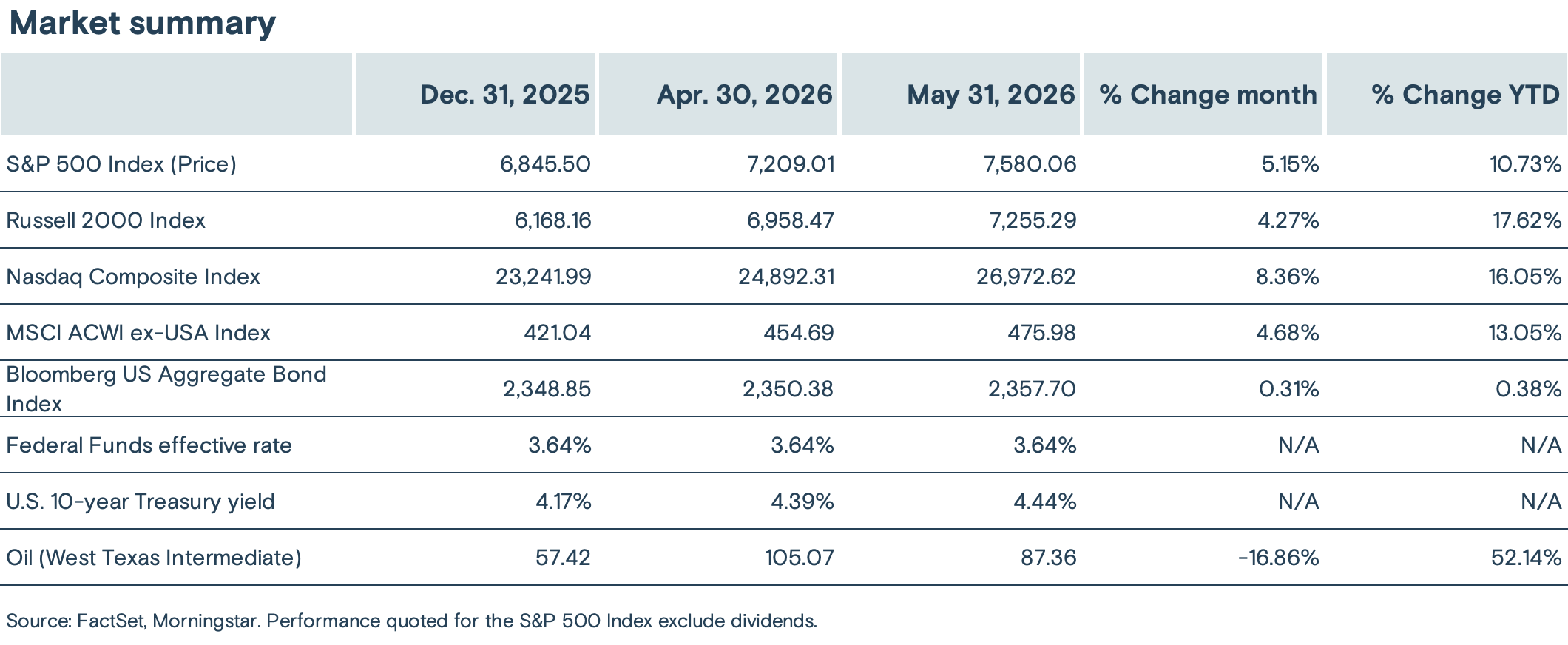
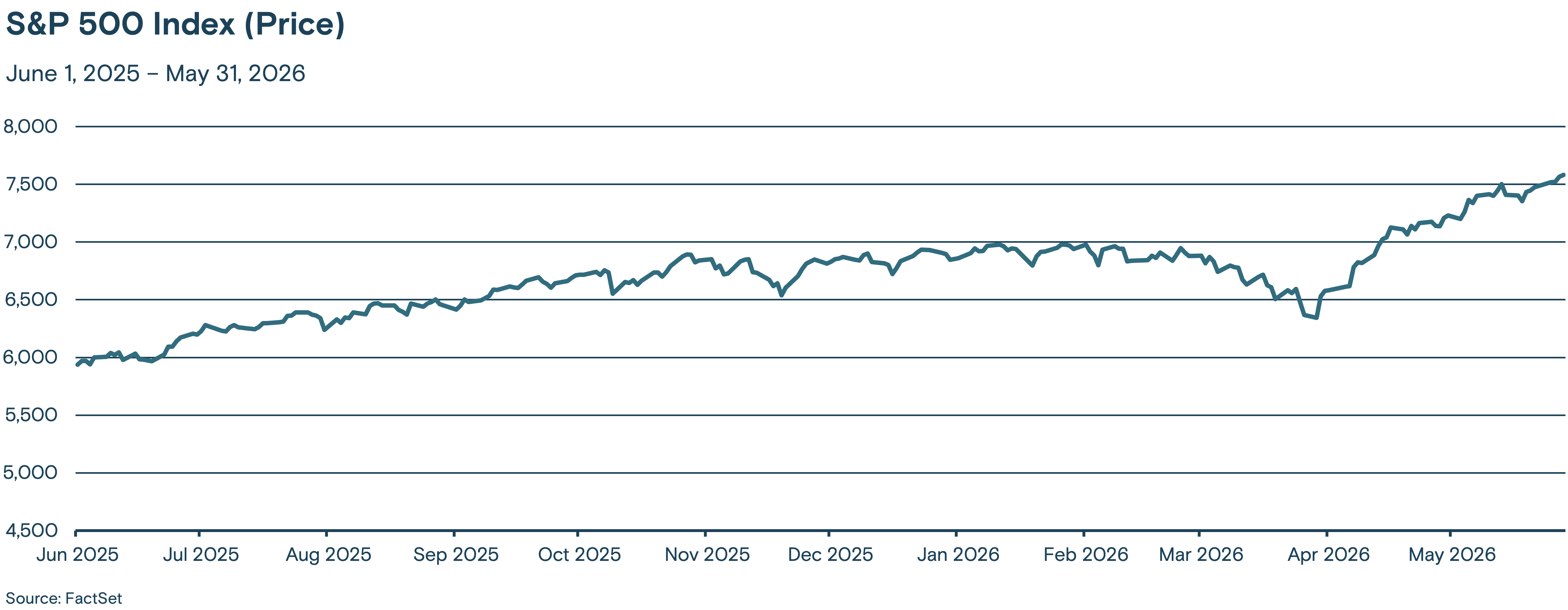
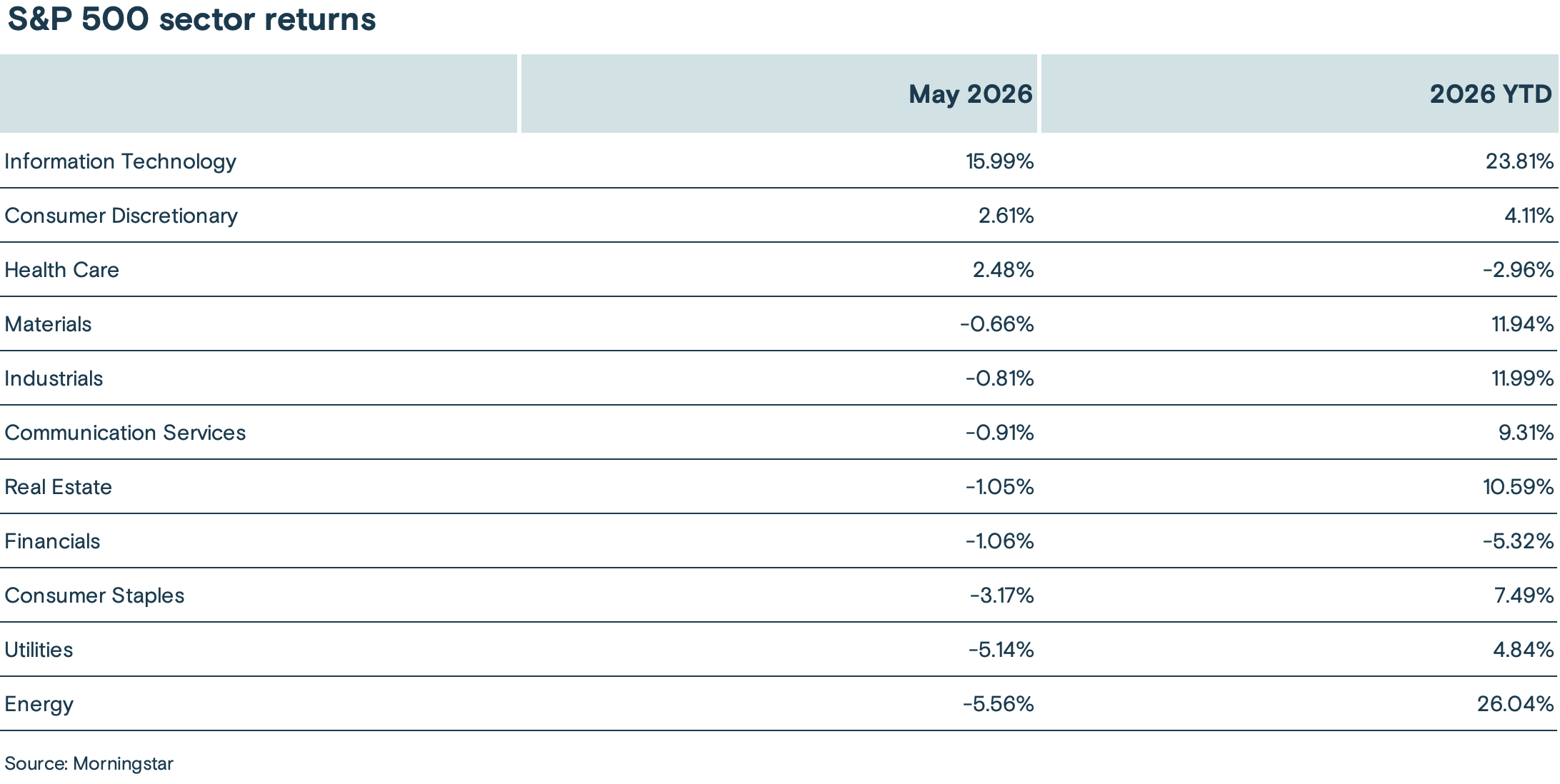
S&P 500® Index is a market-cap weighted index that represents the average performance of a group of 500 large-capitalization stocks.
Russell 2000® Index measures the performance of U.S. small capitalization equities.
The Nasdaq Composite Index is a stock market index that includes almost all stocks listed on the Nasdaq stock exchange. The Nasdaq – National Association of Securities Dealers Automated Quotations – is an electronic stock exchange with more than 3,300 company listings.
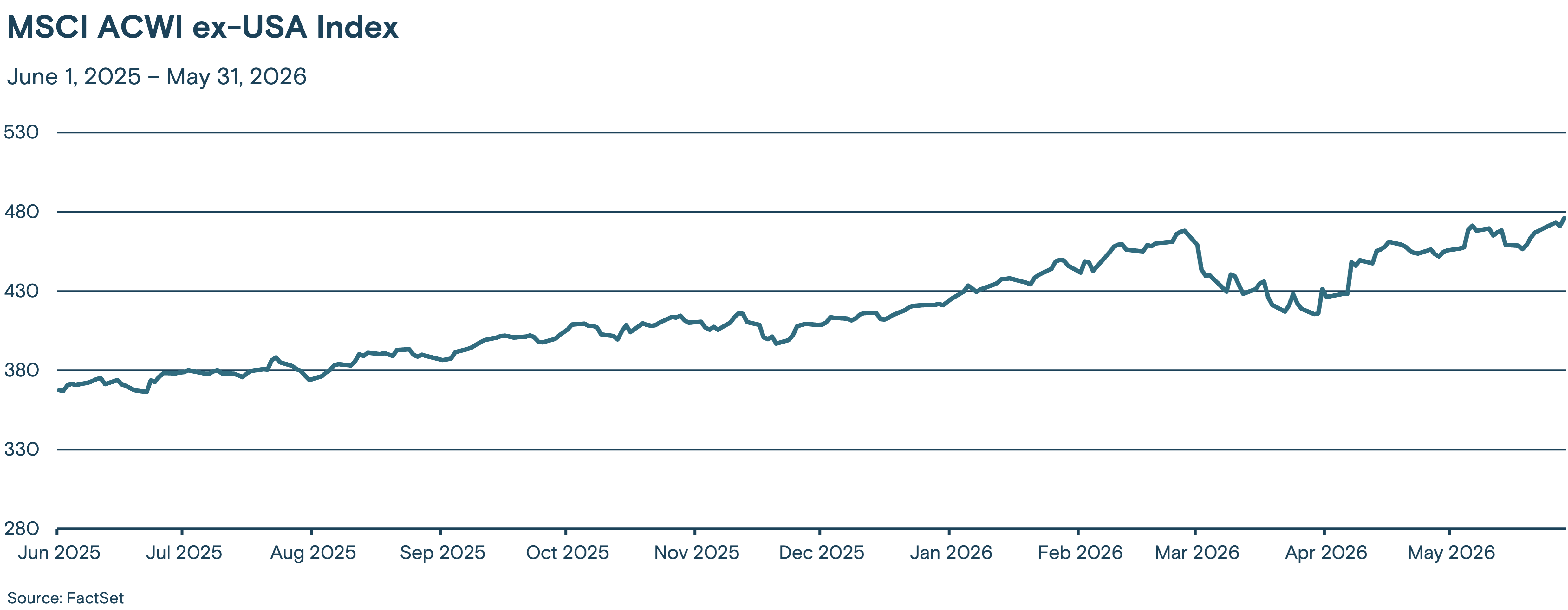
The MSCI ACWI ex-USA Index is an unmanaged index considered representative of large- and mid-cap stocks across developed and emerging markets, excluding the U.S.
The Bloomberg U.S. Aggregate Bond Index is an unmanaged index considered representative of the U.S. investment-grade, fixed-rate bond market.
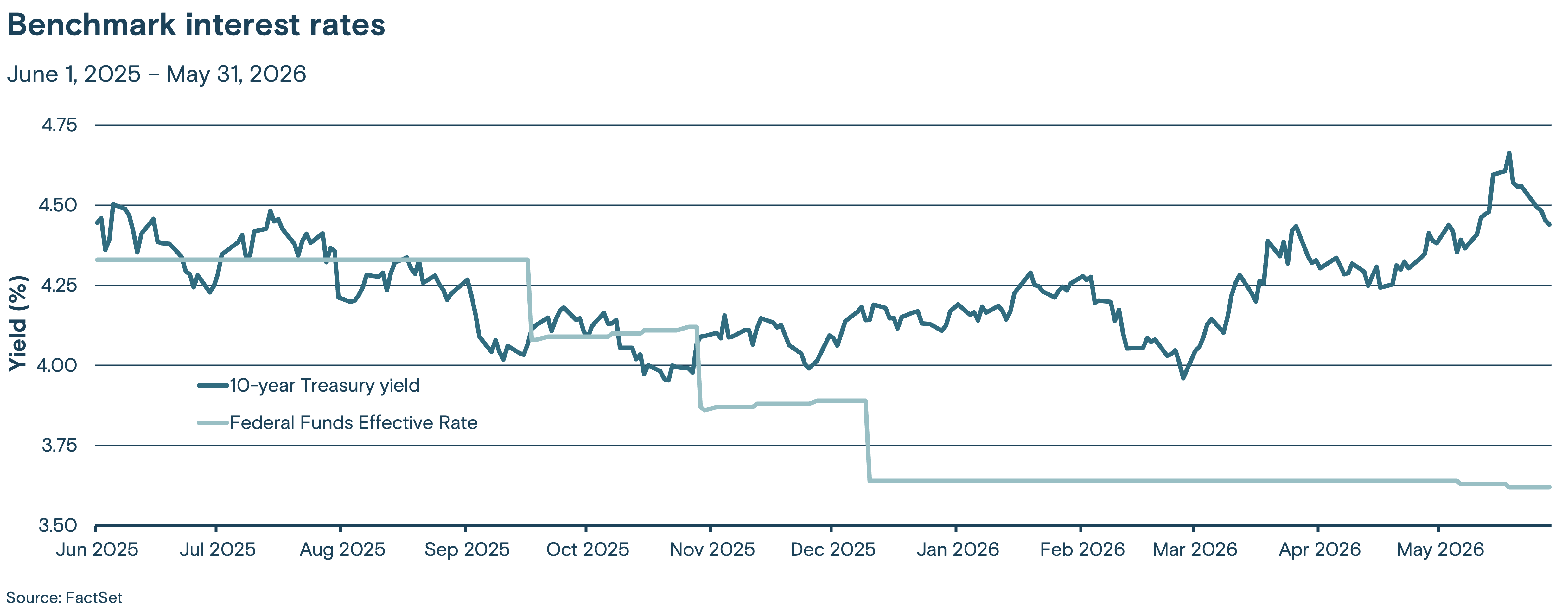
The Federal Funds effective rate is the interest rate at which depository institutions (mainly banks) lend reserve balances to other depository institutions overnight on an uncollateralized basis. In simpler terms, it's the rate banks charge each other for short-term loans to meet their reserve requirements.
The Institute for Supply Management Purchasing Managers Index (PMI) measures the month-over-month change in economic activity within the manufacturing sector.
The University of Michigan Consumer Sentiment Index is a consumer confidence index published monthly by the University of Michigan.
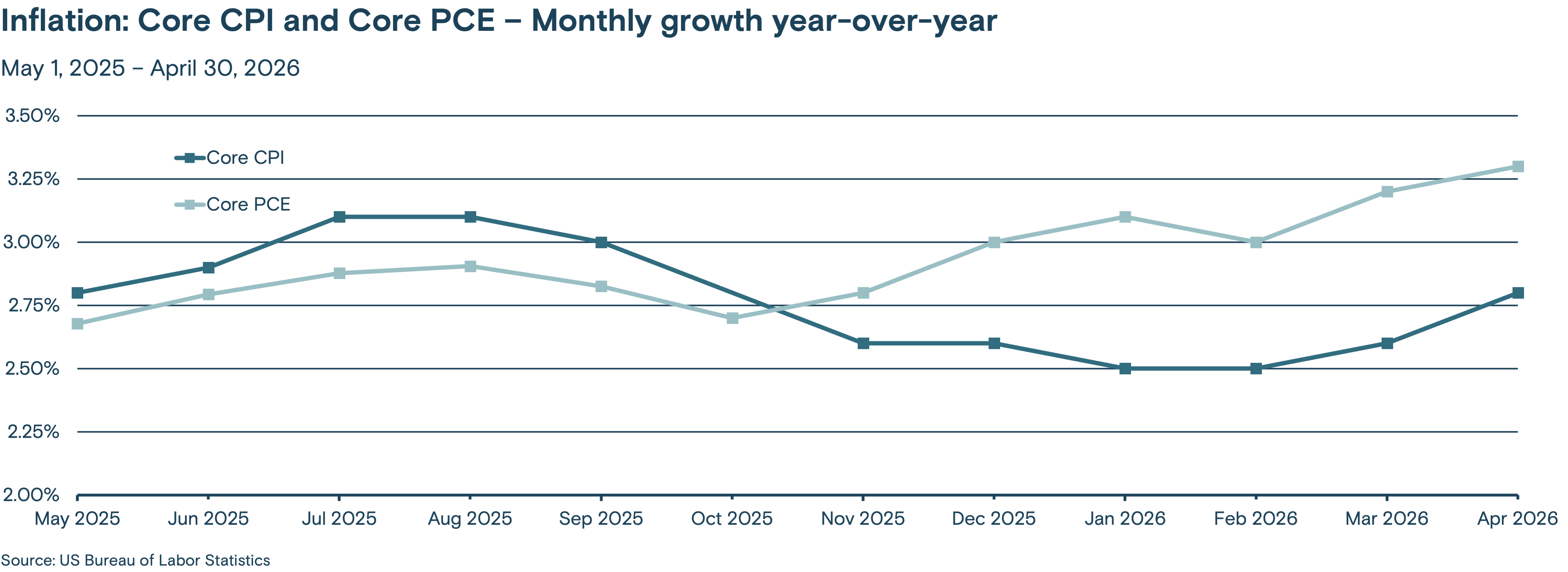
The Core Consumer Price Index (CPI) measures changes in the prices of goods and services, with the exclusion of food and energy.
The Consumer Price Index measures the monthly change in prices paid by U.S. consumers for a basket of goods and services.
The Core Producer Price Index (PPI) measures the average change over time in the selling prices received by domestic producers for their output.
The Producer Price Index (PPI) is a monthly economic indicator that measures the average change over time in the selling prices received by domestic producers for their output.
The Core Personal Consumption Expenditures (PCE) Price Index, also known as consumer spending, is a measure of the spending on goods and services, excluding food and energy prices, by people of the U.S.
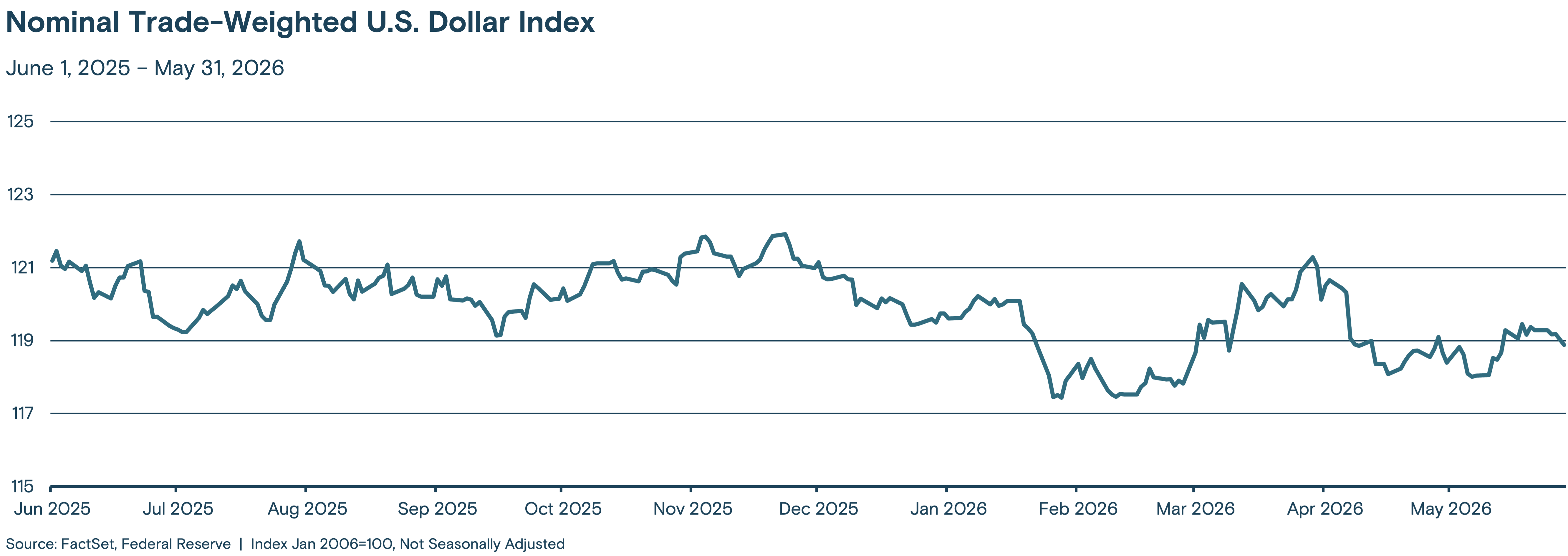
The Nominal Broad Trade-weighted U.S. Dollar Index measures the value of the U.S. dollar based on its competitiveness versus trading partners.
The KOSPI (Korea Composite Stock Price Index) is the benchmark stock market index of all common shares traded on the primary board of the Korea Exchange (KRX).
Any indexes mentioned are unmanaged and do not reflect the typical costs of investing. Investors cannot invest directly in an index.
Past performance is not necessarily indicative of future results.

![October 2026 Thrivent market & economic update [VIDEO]](/content/dam/thrivent/mcs/site-media/insights/market-update/october-2026-market-and-economic-update/q4-2026-market-econ-update-thumbnail.png/_jcr_content/renditions/cq5dam.web.1280.1280.jpeg)